
Elections in Jersey

How the States Assembly is elected

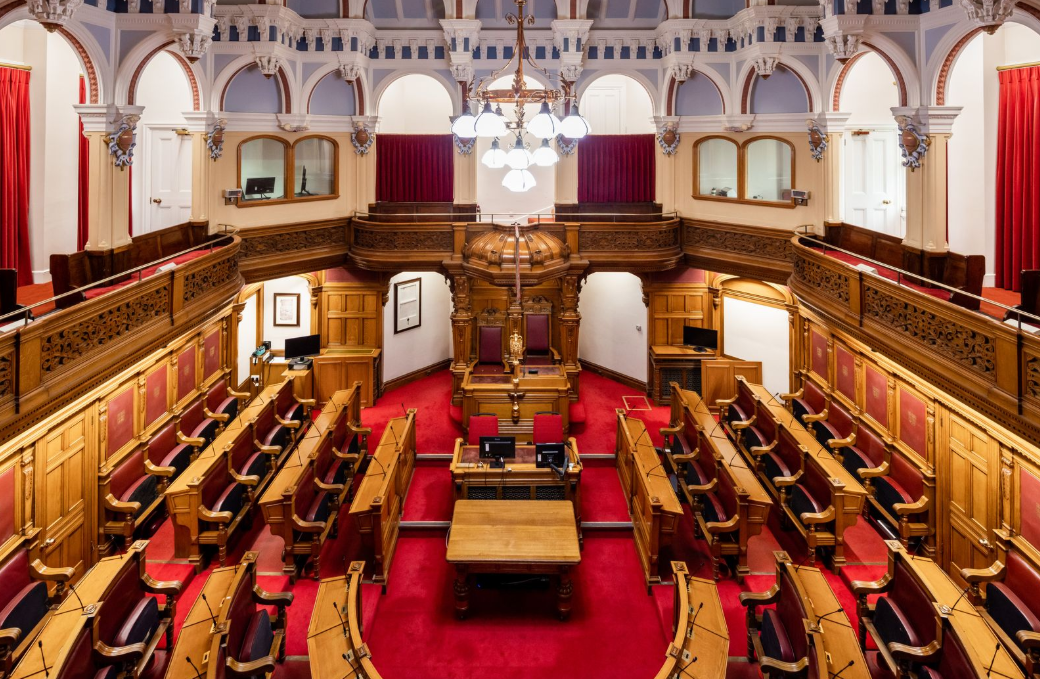
Elections to the States Assembly – Jersey’s elected parliament – are held every four years. Jersey’s next Island-wide elections will be held on Sunday 7 June 2026.

Registered voters elect individuals to represent them as States Members in the States Assembly where Jersey’s laws and policies are debated and decided. All 49 Members are elected on the same day.

Following a decision by the States Assembly, the role of Senator will return for the 2026 elections. This means that on Sunday 7 June, Islanders will elect 49 States Members for the next four years: 9 Senators (Island-wide), 12 Connétables (Parish) and 28 Deputies (Constituency).

2026 Election Candidates were announced on Monday 27 April 2026, and you can find out more about them by reading their manifestos online. 

A printed booklet containing all manifestos, along with further information on when and how to vote, will be delivered to all residential addresses in mid-May, and can be downloaded earlier now.

Easy Read Guide to voting in Jersey

This Easy Read document has been produced to help everyone in Jersey understand how to vote and take part in elections.

Easy Read is an accessible, standardised format that presents complex information through simple, plain English, supported with large text and images.

If you would like a printed copy or a digital copy of the Easy Read, email: contact@vote.je

Image of the front page of the Easy Read document that shows a person putting their ballot paper in a box.

Who can vote

You do not need to manually register to vote as Jersey has introduced a system of automatic voter registration.

You are eligible and should have been automatically added to the electoral register if you are aged 16 or over and have lived in Jersey for:

  • 12 months on Election Day (Sunday 7 June 2026); or
  • 6 months on Election Day, plus periods that total five years.

You do not have to be a British citizen to register to vote in Jersey.

The electoral register – important change:

The register is based on data held by the Government. If you have left the Island for several months and not told the Government you’re back, or moved house and not informed anyone, we encourage you to check your details on the register by contacting your Parish.

You could find that you are still registered at your old address and only able to vote in that Parish/Constituency. This could change the candidates that you are eligible to vote for and where you should go to vote. If any of this might apply to you, please check at your Parish Hall as soon as you can.

There are three ways you can cast your vote in Jersey

  1. At a polling station on Election Day
  2. By postal vote, in advance of Election Day
  3. Early voting at ‘pre-poll’

If you are sick, incapacitated or have challenges with literacy, or if you are a carer of someone who falls into these categories and cannot have voted by post, you can request a home visit. Parishes can send an official to you to take your vote so that registered voters are not prevented from participating due to sickness. Find all parish contact details.

How many candidates can you vote for

There are three different types of States Member to vote for on Election Day:

Senator – vote for up to nine candidates to represent the whole Island.

Connétable – vote for one candidate to represent your Parish.

Deputy – vote for between two to four candidates depending on your Constituency. To find your Constituency, visit our Constituency Finder or contact your Parish Hall. Once you know this, you can check how many States Members you are eligible to vote for here:

Parish of residence: Constituency of residence: One vote for the Connétable (Constable) of: Number of Deputies you can vote for: Number of Senators you can vote for: Total number of States Members you can vote for:
Grouville Grouville & St. Martin Grouville 2 9 12
St. Brelade St. Brelade St. Brelade 3 9 13
St. Clement St. Clement St. Clement 3 9 13
St. Helier St. Helier Central St. Helier 4 9 14
St. Helier St. Helier North St. Helier 3 9 13
St. Helier St. Helier South St. Helier 3 9 13
St. John St. John, St. Lawrence and Trinity St. John 3 9 13
St. Lawrence St. John, St. Lawrence and Trinity St. Lawrence 3 9 13
St. Martin Grouville and St. Martin St. Martin 2 9 12
St. Mary St. Mary, St. Ouen and St. Peter St. Mary 3 9 13
St. Ouen St. Mary, St. Ouen and St. Peter St. Ouen 3 9 13
St. Peter St. Mary, St. Ouen and St. Peter St. Peter 3 9 13
St. Saviour St. Saviour St. Saviour 4 9 14
Trinity St. John, St. Lawrence and Trinity Trinity 3 9 13


How to decide who to vote for

Ahead of an election there’s often a lot of news, social media activity and campaign events, which can make choosing a candidate challenging. As Jersey’s official guide to elections, Vote.je provides clear, accessible information about candidates and voting.

Vote.je offers resources both online and in person. You can find details of events such as the Candidate Fayre and Hustings, where voters can meet and question candidates, on our Events page. You can also find candidate contact details if you would like to get in touch directly.

Manifestos

Election candidates create a manifesto, which allows them to set out what they plan to achieve as a States Member if they are elected.

The 2026 candidate manifestos are now available to read online. A printed booklet containing all manifestos, along with further information on when and how to vote, will be delivered to all residential addresses in mid-May, and can be downloaded earlier below. This information will also be available in Portuguese.

Candidates have also been invited to record a short video version of their manifesto. These will be published on the Vote.je website and YouTube channel and will be available to watch in May. Candidates and their supporters are also welcome to share these on their own websites and social media channels.

As a voter, you can use each manifesto to help decide which candidate best represents your views. Voters often refer back to manifestos to assess how well elected members are delivering on the commitments they made.

Voting for none of the candidates

‘None of the candidates’ (also referred to as ‘none of the above‘) is an option available to voters only when there are either the same number of candidates as vacancies, or fewer candidates than vacancies. Having this option on the ballot paper means that candidates are not automatically elected without opposition.

This provides you with an opportunity to voice your opinion on the candidates if you do not feel that they share your views and values, as an alternative to just not voting. Choosing ‘none of the candidates’ is a vote against all the candidates running for that position.

If ‘none of the candidates’ receives the most votes, no one will be elected and there will be a by-election later.

‘None of the candidates’ is an option in the following elections:

  • Connétable of Grouville
  • Connétable of St Clement
  • Connétable of St John
  • Connétable of St Martin
  • Connétable of St Ouen
  • Connétable of St Peter
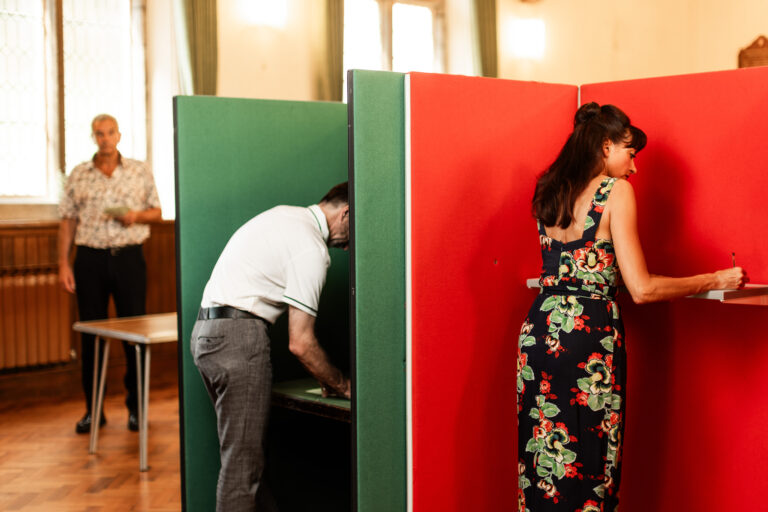
Voters writing ballots

Independent and party candidates

Election candidates either stand for election as a member of a political party or as an independent candidate.

Party candidates need to ensure their election advertising clearly states their party name. On Election Day, the ballot papers will say which political party a candidate is in so you know exactly what you are voting for.

Campaign advertising

During the election campaign, Islanders can expect to see candidates’ posters and banners appearing in public locations.

Candidate and political parties also tend to post leaflets or flyers through letterboxes to ask for support and votes on election day.

You may also be ‘door-stepped’ by candidates at your home address. This is a traditional pre-election activity where candidates knock on doors around their constituency or Parish in order to speak with voters to find out about the issues and concerns in the local area and to see if you are interested in voting for them on election day.

What happens after Election Day

Once the polling stations are closed, the votes are counted and the results are announced. The candidates with the most votes are elected.

The newly-elected Members are ‘sworn-in’ to their new roles around a week after the election and the new States Assembly meets for the first time to decide which States Member will become Jersey’s new Chief Minister.

See the States Assembly website for more on how this works.

By-elections

Where there is a vacancy during the four-year term of the Assembly, it may be necessary to hold a by-election.

By-elections are usually a one-off event where there is a vacancy to fill and only the registered voters in the Parish or Constituency with the vacancy are eligible to vote.

Candidates are invited to stand in the by-election and the person who wins will take on the available role for the remaining time in the States Assembly until the following election.

Vote.je will publish details of candidates and polling dates in the event that there is a by-election.

Register for updates

Whether you're considering standing for election in 2026 or simply want to stay informed as a voter, sign up to receive the latest news and events direct to your inbox. Your name and email address will be held securely by the States Greffe and used only for the purpose of sharing election updates.