
What does a States Member do?

There are 49 elected Members of the States Assembly who are collectively responsible for:

  • making new laws and regulations
  • approving the amount of public money to be spent by the States every year
  • approving the amount of tax to be raised
  • holding Ministers to account.

All 49 Members are voted in on the same day (except when a by-election is called), for a four-year term of office.

From June 2026, the Assembly will be made up of Senators, Connétables and Deputies. All Members:

  • are required to attend States meetings;
  • have the power to bring forward proposals (‘Propositions’) for change to be considered by the Assembly;
  • can expect to be contacted by constituents about issues that they care about;
  • are eligible to become part of the Government as Ministers or take on roles in Scrutiny.
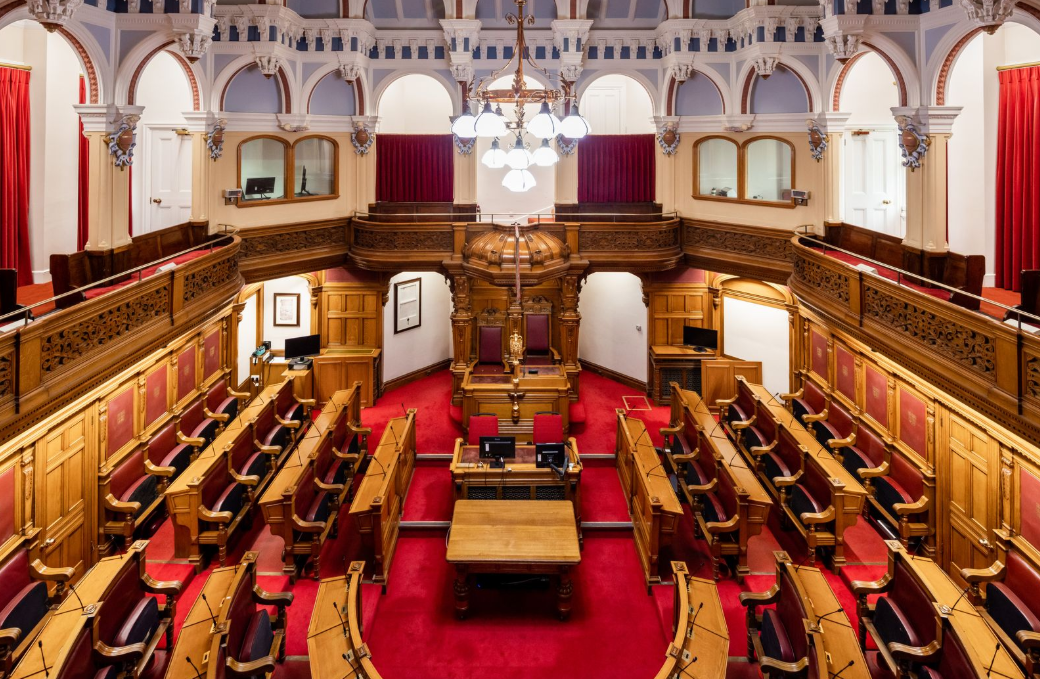
Insider the States Chamber

Senators

Following a decision of the States Assembly in March 2025, the role of Senator will be reintroduced from June 2026.

There will be 9 Senators who will all represent the whole Island. Candidates standing for the role of Senator can live in any Parish.

Connétables (Constables)

In June 2026 12 Connétables will be elected, one to represent each Parish in Jersey.

As well as being States Members, Connétables are the head of their Parish. Parish work involves dealing with Parishioners’ queries, managing everyday matters such as rubbish and recycling collections, the upkeep of roads, ensuring dog licences are issued, overseeing the policing of the Parish, and more.

To stand for election as a Connétable, you need to live in the Parish you wish to represent.

Deputies

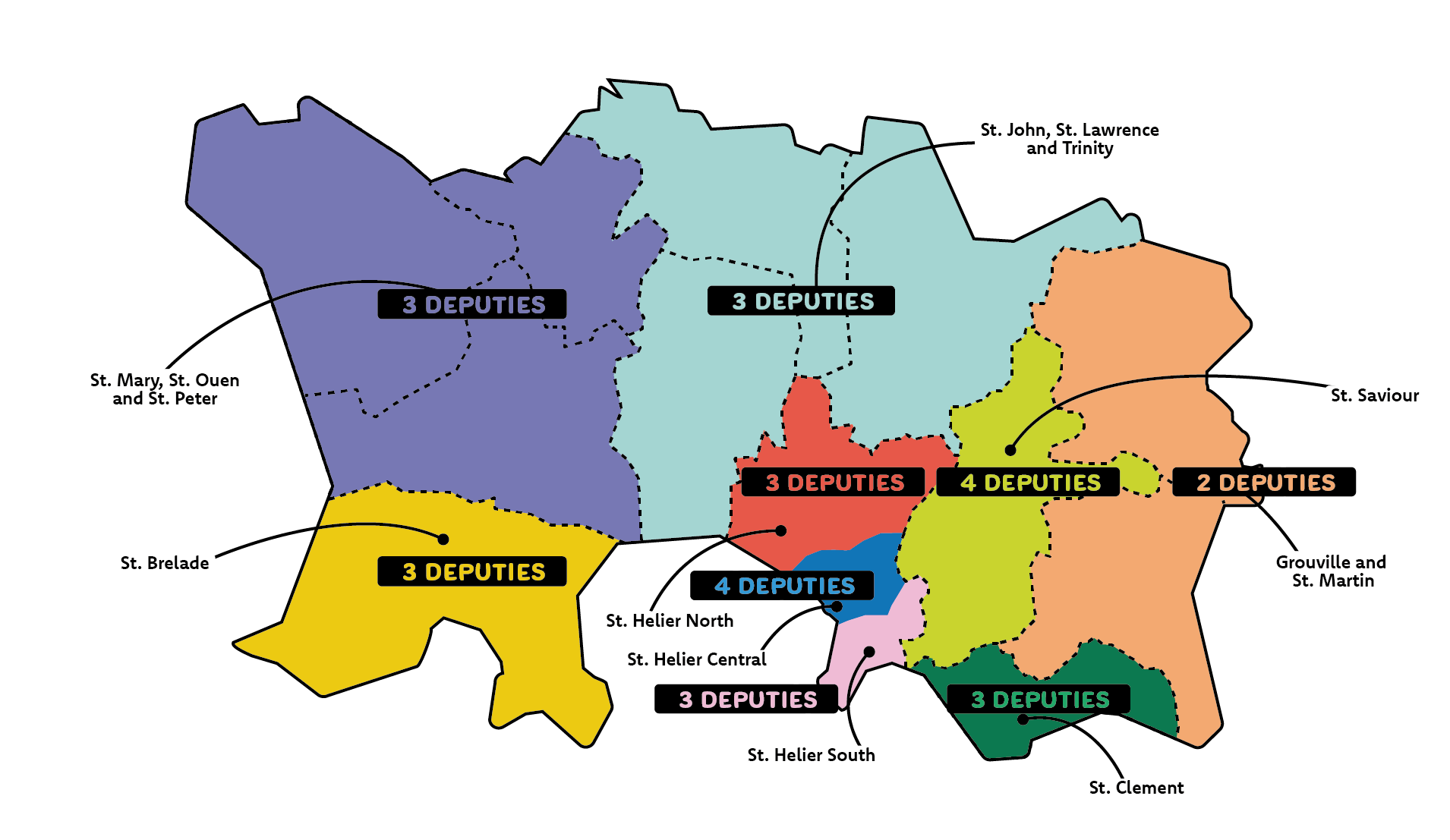
In June 2026, 28 Deputies will be elected to represent one of nine electoral constituencies (as shown on the map).

You don’t have to live in the constituency you wish to represent but you should expect to get involved in matters relating to the community in that constituency.

The number of Deputies per constituency to reflect the population – the more people, the more Deputies.

Attending States Meetings

As a States Member, you are required to attend all meetings of the States unless ill (malade) or off island on States’ business (absent de l’Île) or excused due to another important prior engagement such as a hospital appointment. There is the provision to attend remotely from home, if you are needing to isolate, otherwise States Members meet in the States Chamber.

States meetings are held every 3 weeks on Tuesdays, with continuation days on Wednesdays and Thursday, as required.

Members need to prepare for debates in the States and will receive a large volume of documentation before each meeting. Members need to research the matters under discussion to decide whether they will support or oppose the matter. There may be amendments to a particular proposal, or a member might like to make their own amendment having read what is being put forward. As a new or existing States member, there will be training available to help you with all of this and there are plenty of resources to explain how you can fulfil these tasks.

Rules of the Assembly

Participation in States Meetings is guided by the rules of the Assembly known as the ‘Standing Orders’. When speaking in a debate, some members like to prepare a speech beforehand, while others might decide to speak on the spur of the moment as they listen to the debate.

The Member who has brought forward the proposition will speak first to introduce their proposition, and also last to answer any questions or statements mentioned during the debate.

Voting

Members vote at the end of debates to decide whether or not a proposition should be taken forward. Voting is usually undertaken using an electronic voting system. Members can vote Pour (for), Contre (against) or Abstain. Votes are recorded by the Greffier of the States, who has official responsibility for keeping a record of the decisions of the States Assembly.

Records of meetings

States Assembly meetings are broadcast live via Webcast and are also available on YouTube. Minutes are officially recorded of attendance, questions and statements, and decisions taken. Since 2005, there have also been complete transcripts of debates made and these are added to the Hansard records.

Supporting Parishioners/Constituents

Many States Members hold drop-in sessions, where they make themselves available to listen to any issues, concerns, or feedback that the public in their voting area have. Those who don’t hold dedicated drop-in sessions, have their contact details available so that people can get in touch to discuss specific issues.

Specific Areas of Interest

Members will also pursue political matters in which they have a particular interest. A Member may, for example, have a special interest in the environment, tourism, agriculture and so on, and will use various methods in an attempt to influence policy on these issues. They may hold public meetings or meetings with interest groups; they may deal with the local media to raise awareness of their views and those they seek to represent; or they may lodge a proposition for debate in the States. If a Member has personal outside interests in a particular area, such as they are a landlord or have a hospitality business, then they are required to declare this as a potential conflict of interest.

Other Official Work

You could be appointed a Minister or Assistant Minister, which means you will work as part of the Government team and the Council of Ministers. Or, you can become a member or Chair of a Scrutiny panel. Scrutiny holds the Government of Jersey to account, and reviews the policies and legislation put forward by Ministers, on behalf of the public. You do not have to be in Government to be able to create your own propositions. Propositions are used to propose new laws or changes to existing laws, or to make changes to policy, and these are debated by the States Assembly.

Travel

As an elected Member, you may be required to travel to other countries in order to represent Jersey in talks, international co-operation meetings, and to ensure that Jersey’s best interests are being heard outside the Island.

Some States Members are involved in The Commonwealth Parliamentary Association which is an opportunity for Jersey to showcase its parliamentary democracy and to learn from other jurisdictions around the world.

Register for updates

Whether you're considering standing for election in 2026 or simply want to stay informed as a voter, sign up to receive the latest news and events direct to your inbox. Your name and email address will be held securely by the States Greffe and used only for the purpose of sharing election updates.